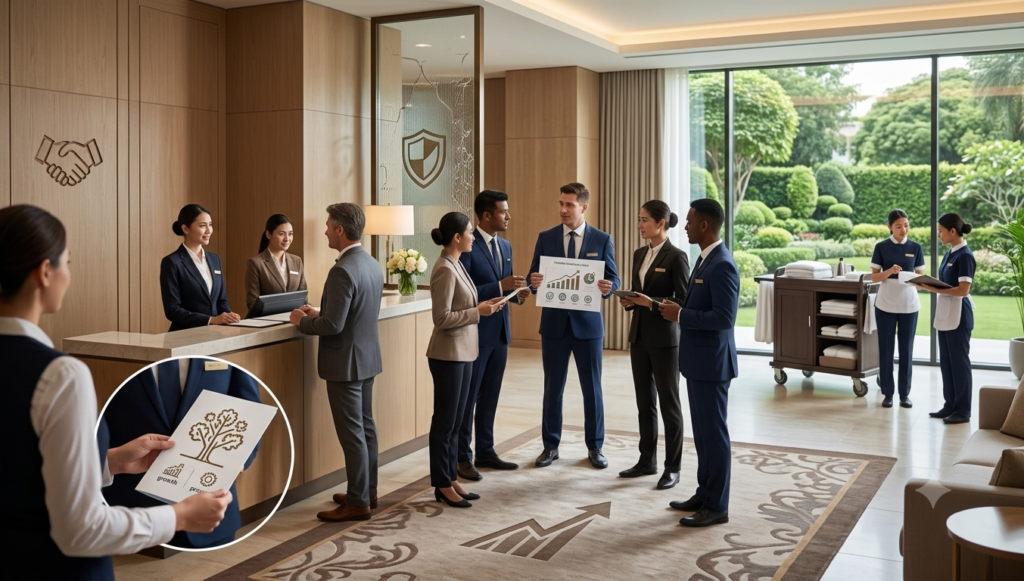
The success of any hotel depends heavily on the quality of its people. A beautiful property, excellent facilities, and a strong marketing strategy can attract guests, but well-trained hotel staff are essential for delivering a memorable guest experience. This is why hotel staff training should be a key priority for every hotel, resort, and hospitality business.
Effective hotel staff training helps employees understand their responsibilities, improve their professional skills, communicate better with guests, and handle daily hotel operations efficiently. A well-trained hospitality team can improve guest satisfaction, increase operational efficiency, reduce mistakes, and contribute to stronger hotel performance.
For hotels looking to create a high-performing team, training should not be considered a one-time activity. It should be an ongoing process that develops employees at every level, from front office and housekeeping teams to food and beverage staff, supervisors, and hotel managers.
Why Hotel Staff Training Is Important
Hotel employees interact directly with guests throughout their stay. From the moment a guest makes a reservation to check-in, room service, housekeeping, dining, and check-out, every interaction can influence the guest’s overall experience.
Hotel staff training ensures that employees understand how to perform their duties professionally and consistently. Training also gives staff the confidence to deal with different types of guests and unexpected situations.
A strong training program can help hotels:
- Improve guest satisfaction
- Deliver consistent service quality
- Increase employee productivity
- Reduce operational mistakes
- Improve communication between departments
- Handle guest complaints professionally
- Build stronger teamwork
- Improve employee confidence
- Develop future hotel leaders
- Support long-term business growth
When employees know what is expected from them and have the right skills to perform their responsibilities, hotel operations become smoother and more efficient.
What Is Hotel Staff Training?
Hotel staff training is the structured process of teaching employees the knowledge, skills, procedures, and professional standards required to perform their roles effectively.
Training can include practical job training, customer service training, communication skills, safety procedures, technology training, leadership development, and department-specific operational training.
The exact training requirements depend on the size and type of hotel. A luxury resort may require extensive guest experience and service training, while a budget hotel may focus more heavily on operational efficiency and standardized procedures.
Regardless of the property type, the goal remains the same: create employees who can deliver reliable, professional, and guest-focused service.
Key Areas of Hotel Staff Training
A successful hotel training program should cover more than basic job responsibilities. Employees should receive training that develops both technical skills and interpersonal skills.
1. Guest Service Training
Guest service is one of the most important areas of hospitality staff training.
Employees should learn how to welcome guests, communicate professionally, understand guest expectations, provide assistance, and create positive experiences.
Guest service training can include:
- Greeting and welcoming guests
- Professional communication
- Understanding guest needs
- Personalized service
- Handling special requests
- Managing difficult situations
- Complaint resolution
- Creating memorable guest experiences
Employees should understand that even small interactions can have a significant impact on guest satisfaction.
2. Front Office Training
The front office is often the first and last point of contact for guests. Front office employees therefore require comprehensive training.
Training should cover reservation procedures, check-in and check-out processes, payment handling, room allocation, guest communication, telephone etiquette, and hotel technology.
Front office staff should also be trained to manage unexpected situations, such as overbooking, room issues, late arrivals, cancellations, and guest complaints.
A knowledgeable front office team can make the guest journey more organized and professional.
3. Housekeeping Training
Housekeeping plays a major role in guest satisfaction because cleanliness is one of the most important factors guests consider when evaluating a hotel.
Housekeeping staff training should cover:
- Cleaning standards
- Room preparation
- Bathroom sanitation
- Public area cleaning
- Linen and laundry procedures
- Room inspection
- Lost and found procedures
- Safety practices
- Hygiene standards
- Efficient use of cleaning materials
Supervisors should also be trained to inspect rooms and ensure that established quality standards are consistently maintained.
4. Food and Beverage Training
For hotels offering restaurants, room service, banquets, or other food and beverage services, employee training is essential.
Food and beverage staff should understand menu knowledge, service procedures, table presentation, communication, hygiene, order handling, and guest interaction.
Employees should also know how to respond professionally to special dietary requests and service-related complaints.
Consistent training can help create a more professional dining experience while supporting operational efficiency.
5. Communication Skills Training
Communication is at the heart of hospitality.
Hotel employees communicate with guests, managers, colleagues, suppliers, and other departments every day. Poor communication can result in misunderstandings, delays, and guest dissatisfaction.
Hotel staff training should therefore include:
- Verbal communication
- Written communication
- Telephone etiquette
- Active listening
- Professional body language
- Cross-department communication
- Conflict communication
- Clear handovers
Employees should learn how to communicate clearly, respectfully, and confidently in different situations.
How to Create an Effective Hotel Staff Training Program
A successful training program should be structured around the hotel’s actual operational requirements.
Step 1: Identify Training Needs
Start by identifying the skills employees need to improve.
Managers can review guest feedback, online reviews, employee performance, operational mistakes, customer complaints, and departmental reports to identify training gaps.
For example, if guests frequently mention slow check-in service, the hotel may need additional front office training.
If housekeeping receives complaints about room cleanliness, management can introduce targeted housekeeping training and inspection procedures.
Step 2: Set Clear Training Objectives
Every training session should have a clear purpose.
Instead of creating a general goal such as “improve staff performance,” define measurable objectives.
For example:
- Reduce check-in time
- Improve guest communication
- Reduce housekeeping errors
- Increase guest satisfaction scores
- Improve complaint resolution
- Increase employee knowledge of hotel procedures
Clear objectives make it easier to measure whether the training program is working.
Step 3: Create Department-Specific Training
Every hotel department has different responsibilities, so training should be customized.
Front office employees need reservation and guest service training. Housekeeping employees need room cleaning and inspection training. Food and beverage employees require service and hygiene training.
At the same time, all employees should receive basic training in areas such as communication, guest service, safety, and hotel standards.
Step 4: Combine Different Training Methods
Employees learn in different ways. Hotels should therefore use a combination of training methods.
These can include:
- Classroom training
- Practical demonstrations
- Role-playing exercises
- On-the-job training
- Workshops
- Video training
- Departmental coaching
- Mentoring
- Team meetings
- Performance reviews
Practical training is particularly valuable in hospitality because employees need to apply what they learn in real working situations.
Step 5: Provide Continuous Training
Hotel staff training should not stop after an employee’s first week.
Hospitality trends, technology, guest expectations, and operational requirements continue to change. Regular refresher training helps employees stay updated.
Hotels can conduct monthly training sessions, quarterly workshops, department meetings, and regular performance coaching.
Continuous learning also helps employees feel that the organization is investing in their professional development.
Training New Hotel Employees
New employees need a structured onboarding program before they begin working independently.
A strong hotel onboarding process should introduce employees to:
- Hotel policies
- Company culture
- Organizational structure
- Department responsibilities
- Standard operating procedures
- Guest service standards
- Workplace safety
- Communication procedures
- Technology and hotel systems
- Emergency procedures
New employees should also receive practical training with experienced team members.
A structured onboarding program can help employees become productive faster while reducing confusion and operational errors.
Developing Hotel Leadership Skills
High-performing hospitality teams need strong supervisors and managers.
Hotel staff training should therefore include leadership development for employees who are responsible for managing teams.
Leadership training can cover:
- Team management
- Delegation
- Employee motivation
- Conflict resolution
- Performance management
- Decision-making
- Coaching
- Communication
- Problem-solving
- Operational planning
Developing internal leaders can help hotels create a stronger management pipeline and reduce dependency on external recruitment.
The Role of Standard Operating Procedures in Hotel Training
Standard Operating Procedures, commonly known as SOPs, are an important part of hotel operations.
SOPs provide employees with clear instructions for performing routine tasks consistently. They can cover areas such as check-in, room cleaning, complaint handling, restaurant service, emergency response, and shift handovers.
Training employees using well-designed SOPs helps create consistency across departments.
However, employees should not simply memorize procedures. They should understand why each procedure is important and how it contributes to guest satisfaction and hotel performance.
Using Technology in Hotel Staff Training
Technology can make hospitality staff training more flexible and accessible.
Hotels can use online learning platforms, training videos, digital manuals, quizzes, and mobile learning tools to provide employees with training materials.
Technology can also help management track employee progress and identify areas where additional training is required.
However, digital training should complement practical training rather than completely replace it. Hospitality employees need real-world experience to develop communication, service, and problem-solving skills.
How to Measure Hotel Staff Training Success
Training should be measured to determine whether it is delivering real business value.
Hotels can track indicators such as:
- Guest satisfaction scores
- Online reviews
- Customer complaints
- Employee performance
- Service errors
- Employee productivity
- Staff retention
- Training completion rates
- Departmental performance
- Revenue and operational efficiency
For example, if a hotel introduces complaint-handling training, management can compare guest complaints before and after the program.
Measurement helps managers identify which training activities are effective and where improvements are needed.
Common Hotel Staff Training Mistakes
Even hotels that provide training can make mistakes that reduce its effectiveness.
Training Only During Employee Onboarding
One-time training is not enough. Employees need regular refreshers and opportunities to develop new skills.
Using the Same Training for Every Department
Different departments have different responsibilities. Training should be relevant to each employee’s role.
Focusing Only on Technical Skills
Employees also need communication, teamwork, leadership, and problem-solving skills.
Not Measuring Results
Without measuring performance, it is difficult to know whether training is producing meaningful improvements.
Ignoring Employee Feedback
Employees work directly with hotel guests and often understand operational challenges better than anyone else. Their feedback can help management improve training programs.
Benefits of Building a High-Performing Hospitality Team
Investing in hotel staff training can create benefits throughout the organization.
A well-trained team can provide more consistent service, respond to guest needs faster, and work more effectively with other departments.
Employees who receive regular development opportunities may also feel more confident and engaged in their roles.
For hotel owners and managers, this can contribute to better guest experiences, stronger reviews, improved operational performance, and sustainable business growth.
How Hospitality Consultants Can Support Hotel Staff Training
Developing an effective training system can be challenging, especially for new hotels, growing properties, or businesses experiencing operational difficulties.
Professional hospitality consultants can help hotels identify training gaps, develop department-specific training programs, create SOPs, establish service standards, and support management teams with employee development strategies.
A consultant can also review existing hotel operations and recommend improvements based on the property’s goals, market position, guest expectations, and operational challenges.
For hotels seeking long-term improvement, staff development should be treated as an important part of the overall business strategy rather than simply an HR activity.
Conclusion
Hotel staff training is one of the most effective ways to build a professional, confident, and high-performing hospitality team. Employees who receive the right training are better prepared to deliver excellent guest service, follow operational standards, solve problems, and work effectively with their colleagues.
From front office and housekeeping to food and beverage, supervisors, and management, every department benefits from continuous learning and development.
Hotels that invest in structured and ongoing hotel staff training can create stronger teams, improve service quality, increase guest satisfaction, and support long-term operational success.
The most successful hospitality businesses understand that their employees are one of their greatest assets. By providing continuous training, clear standards, practical coaching, and leadership development, hotels can build teams that are prepared to meet changing guest expectations and deliver exceptional experiences every day.